From an early prototype to a product
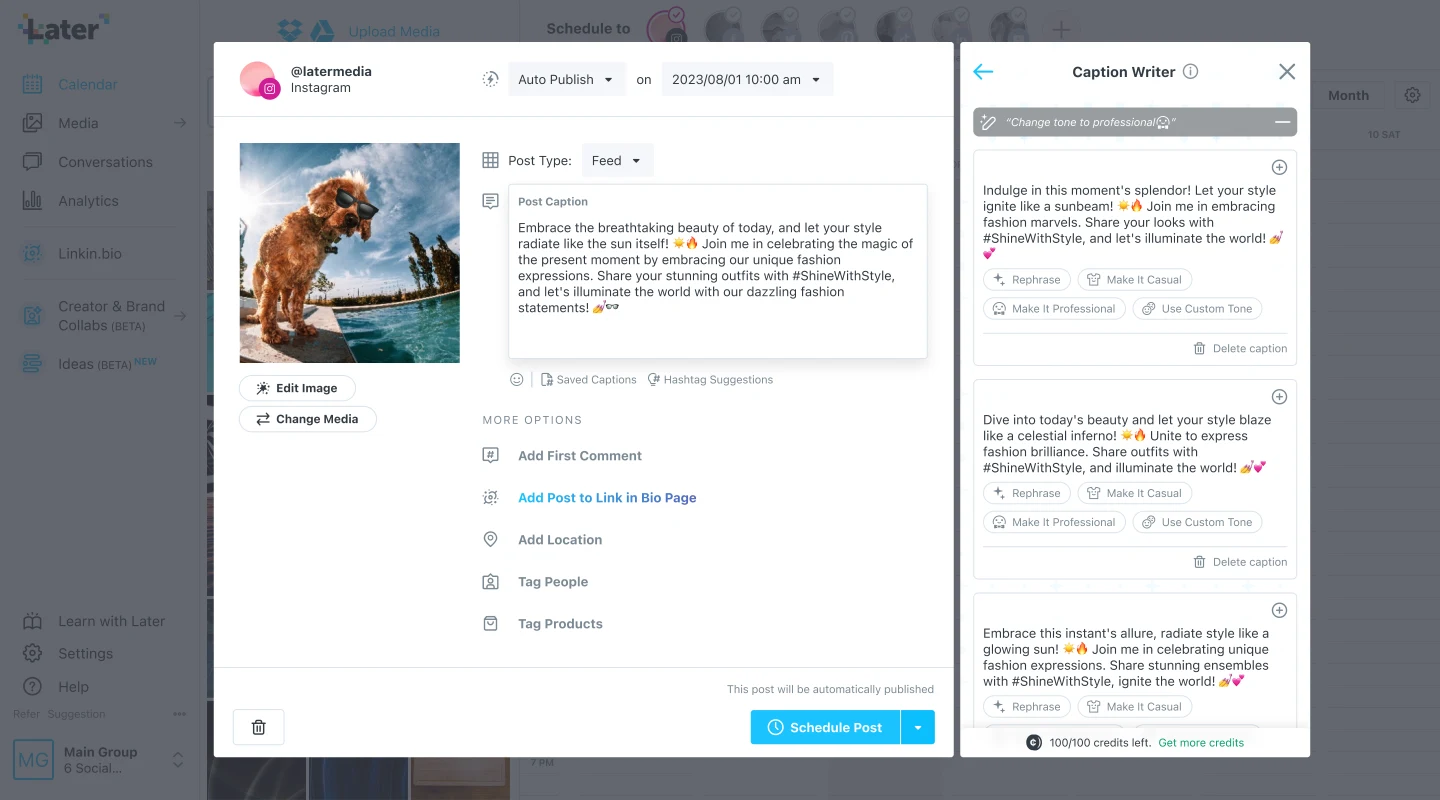
Caption writing was a recurring part of scheduling a social post. As Later introduced AI to the platform for the first time, the team saw an opportunity to help creators find a useful starting point within that task. I worked with the CTO and Head of Design to develop that direction.
I assisted the CTO with an early functioning prototype for closed beta testing and participated in collaborative working sessions with internal stakeholders. I designed the end-to-end workflow and helped plan its development phases, built prototypes for research, and contributed to discussions about cost structure and the feature’s financial model.
The scope extended from the initial prototype to discovery, generation, refinement, and insertion into a post. Because access depended on monthly generation credits, the design also had to explain available credits, limits, and upgrade paths alongside the core writing task. I worked with designers and developers on implementation details and refinements.
Design the whole journey
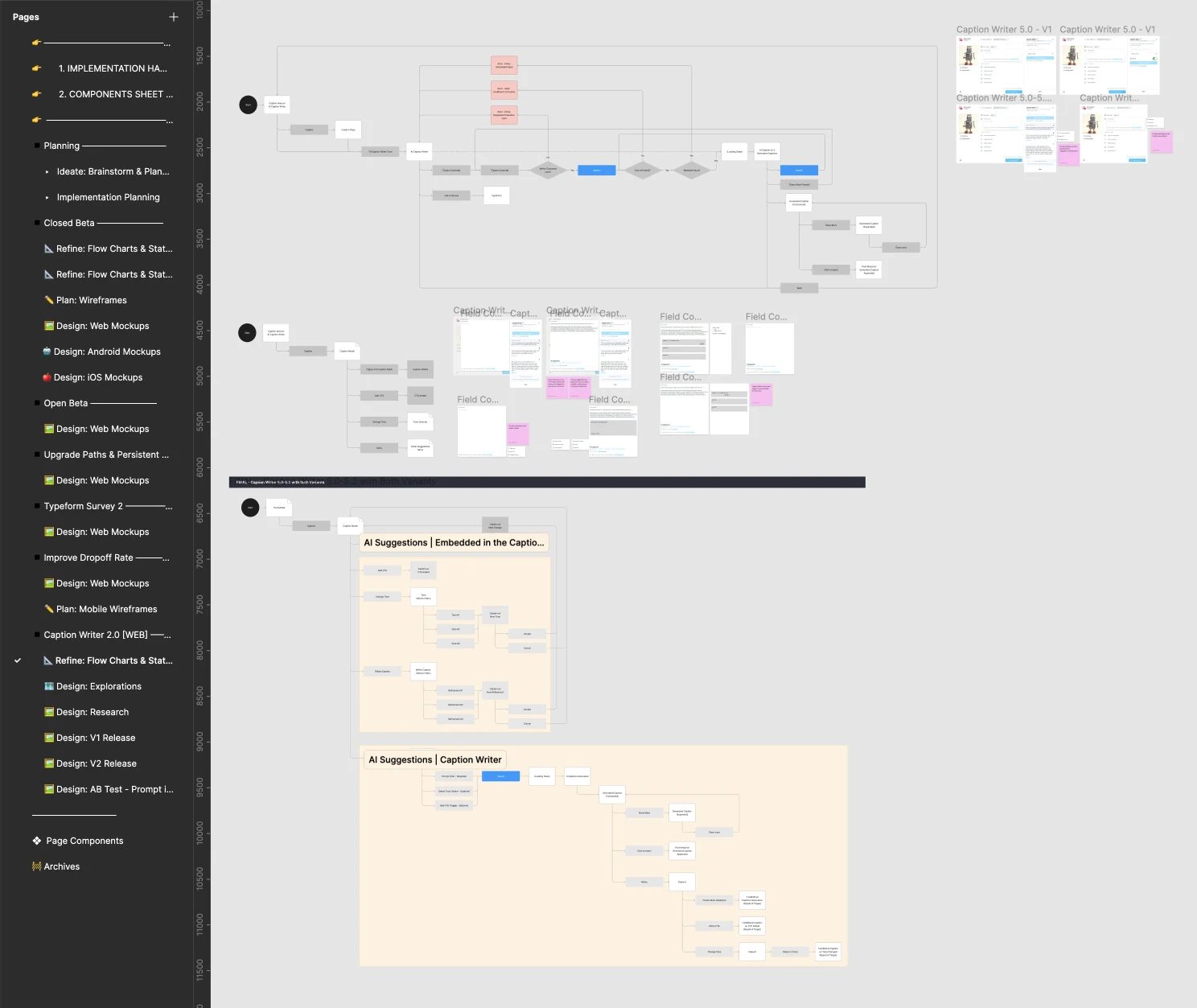
Moving beyond the prototype meant resolving how people would discover the feature, provide enough context, evaluate suggestions, and return to their post.
The original working boards show multiple flow versions and interface explorations. They also make the less visible product work tangible: generation states, credit limits, upgrade paths, and the relationship between the writer and the caption field.
Explore the original flow and interface board
Three interaction decisions
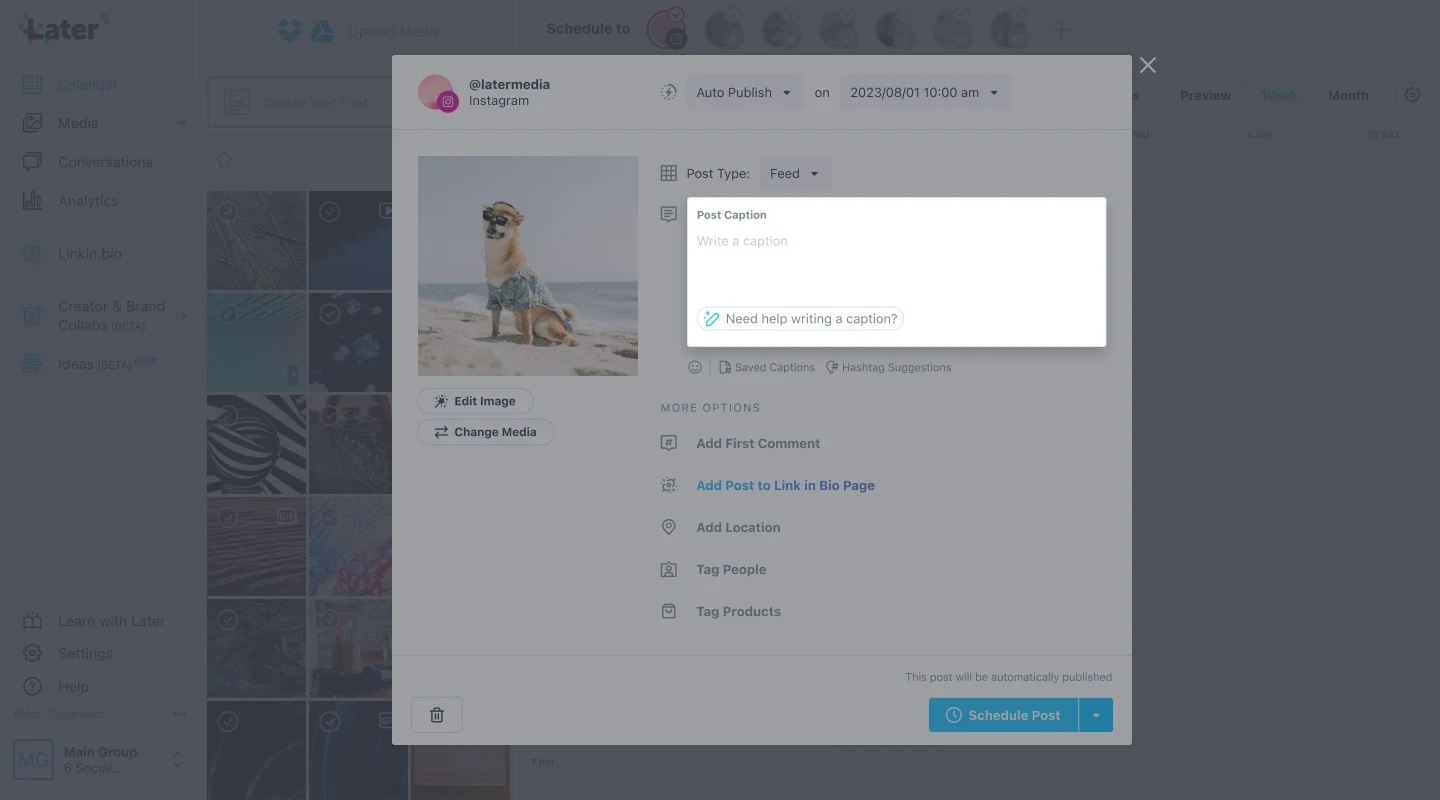
Put assistance at the point of need
- The tension
- Caption writing happens in the context of a post. A separate destination would add a step between generating text and using it.
- The design response
- Place the AI entry point inside the caption field in the post builder.
Keep the draft in view
- The tension
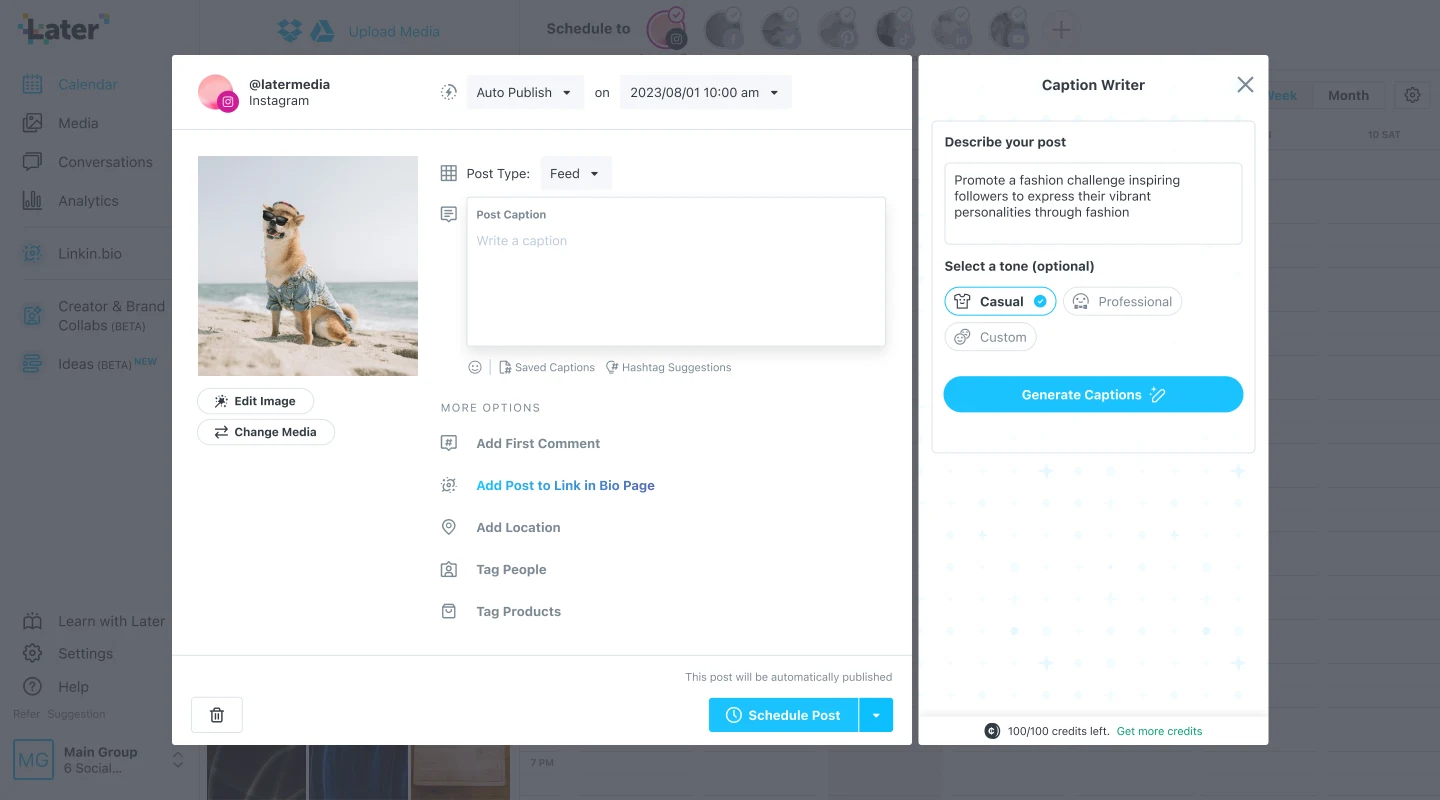
- Creators need to describe what they want while retaining the context of the post they are making.
- The design response
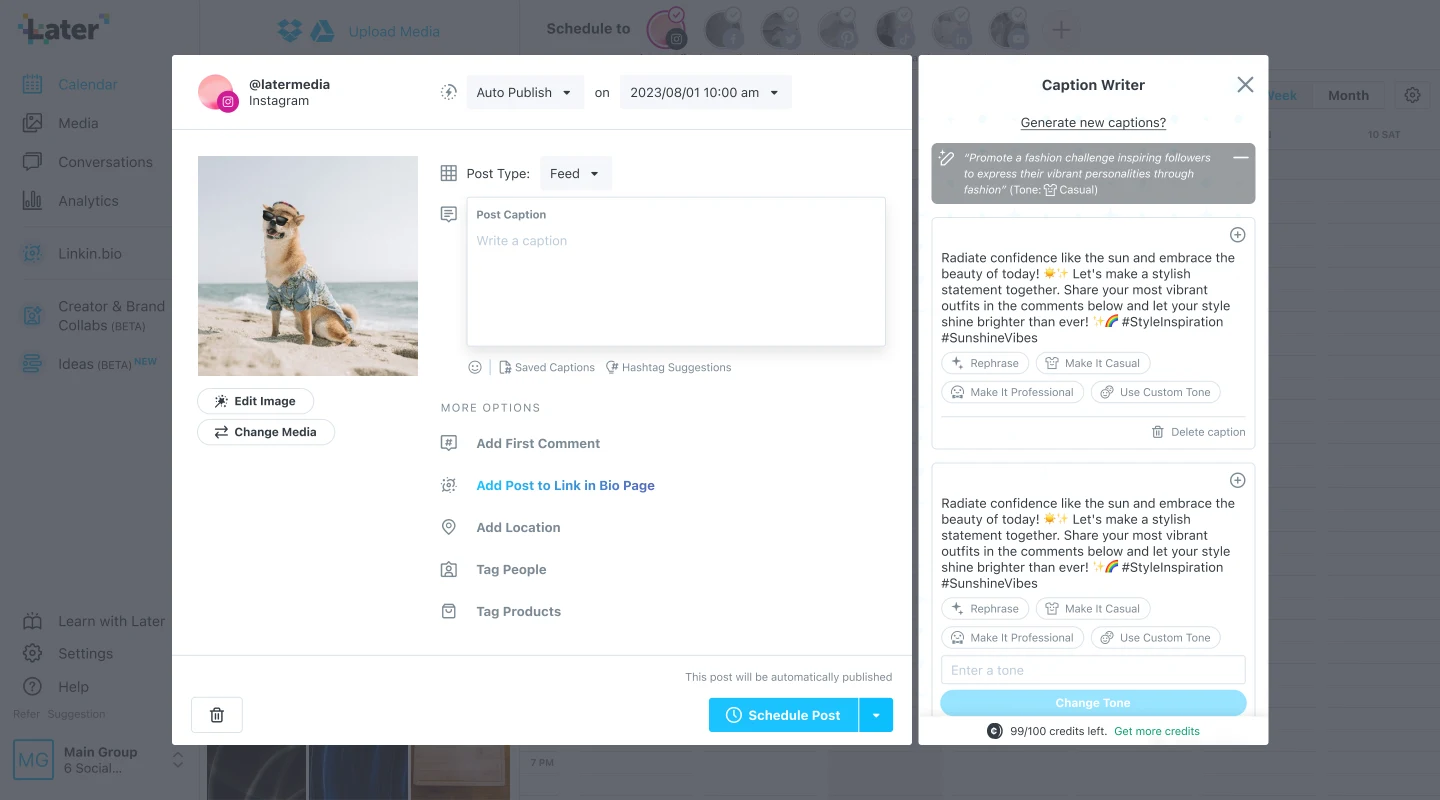
- Open generation in a side panel beside the post. Let creators provide a description and tone, with their available credits visible in the same space.
Make suggestions easy to judge and change
- The tension
- A generated caption is a candidate, not a finished expression of the creator’s voice.
- The design response
- Offer three suggestions, with options to insert, rephrase, or change the tone. Keep the creator in control of what becomes part of the post.
Make the commercial model part of the experience
Caption Writer was a premium feature with tiered access based on monthly generation credits. I contributed to discussions about cost structure and the financial model, alongside designing the end-to-end workflow.
That model had visible interaction consequences. The side panel showed available credits where users requested a generation, placing the access constraint beside the action it affected. The working flows also considered limits and upgrade paths alongside the main creation journey. A complete experience needed to account for access as well as successful output.
The product requirements also covered less visible states: an upgrade changing the available allowance, a downgrade taking effect at the end of the billing period, and credits being restored after a platform failure. These rules made access an ongoing part of the workflow. The design had to help people understand what they could do next, including when a generation failed or their plan changed.
Use product signals to refine the experience
The project notes record a later decision to remove thumbs-up and thumbs-down controls. Few people were voting on generated captions, and the product and data teams were not using those votes to improve the output. The team chose to remove a feedback mechanism that was not supporting its actual process.
Credit-limit behavior raised a different question. People were reaching their allowance, but few responded to a survey about additional credits. The team proposed distinguishing a plan upgrade from interest in extra credits and making the survey invitation more specific. This was a hypothesis to investigate, not evidence that revised copy had improved conversion.
Connect prototyping, delivery, and measurement
I also worked with the product owner on success measurement. The reported measures span discovery, generation, use of the output, and paid trials—different behaviors along the journey, rather than one overall adoption number.
What the results tell us
The reported results capture different points in the experience: opening the writer, generating captions, and inserting a suggestion. They also show that Caption Writer became an entry point to paid trials.
Opening the feature signals discovery; inserting a caption signals use of the output. The distinction matters when evaluating where people find value and where the experience may still need work.
The project connected AI interaction design with product delivery: an early functioning prototype became an experience where creators could discover assistance, generate options, refine a suggestion, and use it without leaving their post.